The airport
KSBP — San Luis Obispo County Regional Airport, also known as McChesney Field — sits right in the middle of the California coast, roughly halfway between San Francisco and Los Angeles. The airport lies in a valley at 212 feet elevation, surrounded on three sides by the rolling hills and ridgelines of the Santa Lucia Range. Three commercial airlines serve the field with nonstop routes to seven destinations, but what gives KSBP its character is the general aviation side: rows of private hangars, a busy Cessna dealership, a self-serve fuel island, and an active EAA chapter that keeps the field alive on weekends.
Passenger numbers approach half a million annually, but the airport still feels like a community field. The terminal has a mid-century California aesthetic — glass, concrete, native landscaping — and the landside area with its fire station, parking, and tree-lined walkways gives it a scale and personality that larger airports lose. That intimacy is what drew us to the project.
The visual environment
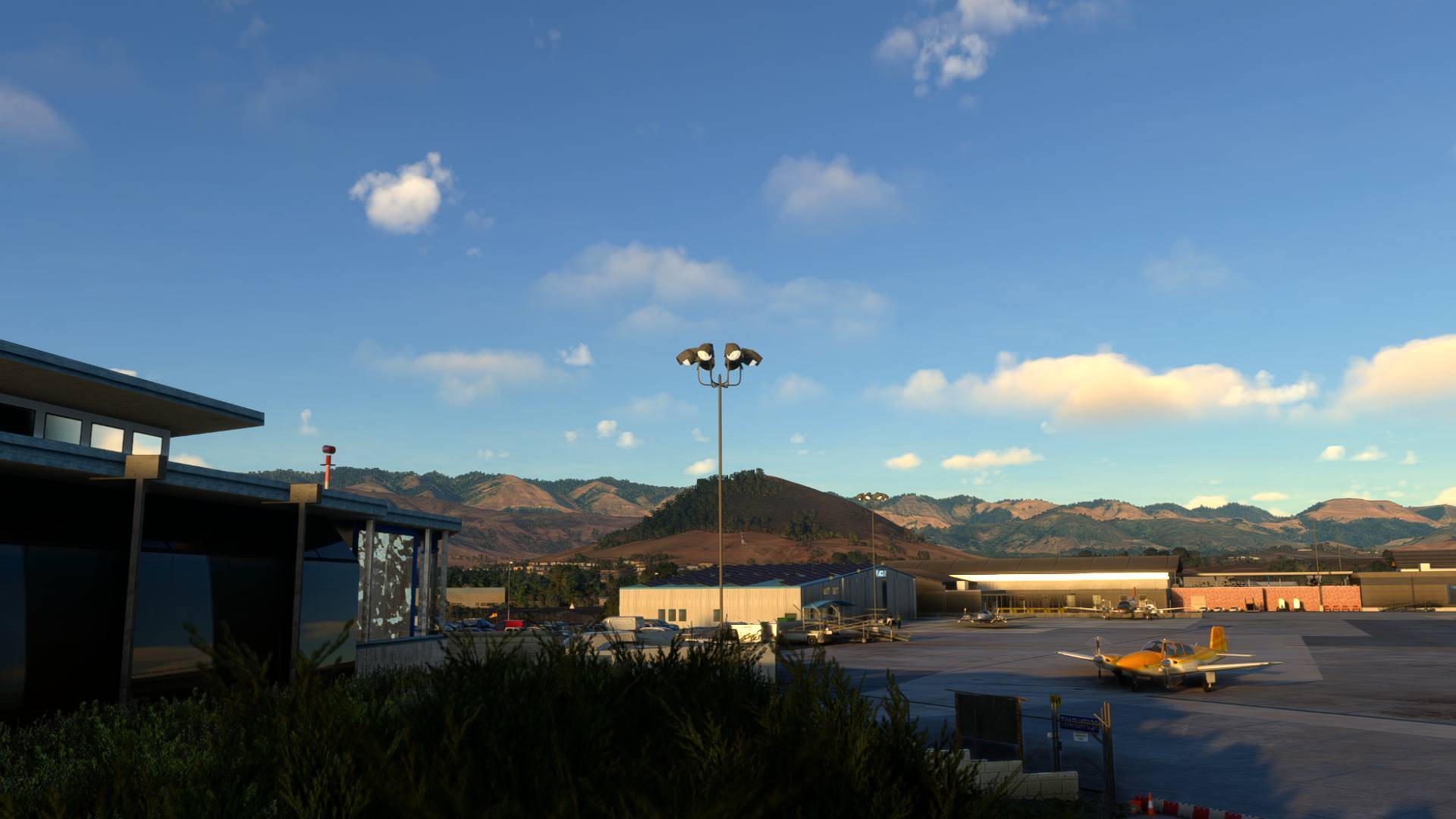
KSBP's defining visual feature is the terrain that surrounds it. The Santa Lucia Range creates a bowl of golden-brown hills that are visible from every angle on approach. In summer, the hills are dry and straw-colored. In winter, they turn green after the rains. This seasonal variation is one of the first things pilots associate with flying into SBP, and it shaped how we approached the ground textures.
The other visual signature is the California coastal light. The airport sits 10 miles inland from the Pacific, and the marine layer that rolls in from Morro Bay affects how the airport looks at different times of day. Early morning can bring soft, diffused light. Afternoons tend to be sharp and warm. Sunset turns the hills orange and throws long shadows across the apron. Our PBR material system had to hold up across all of these conditions — not just look correct at noon.
Terminal and landside detail
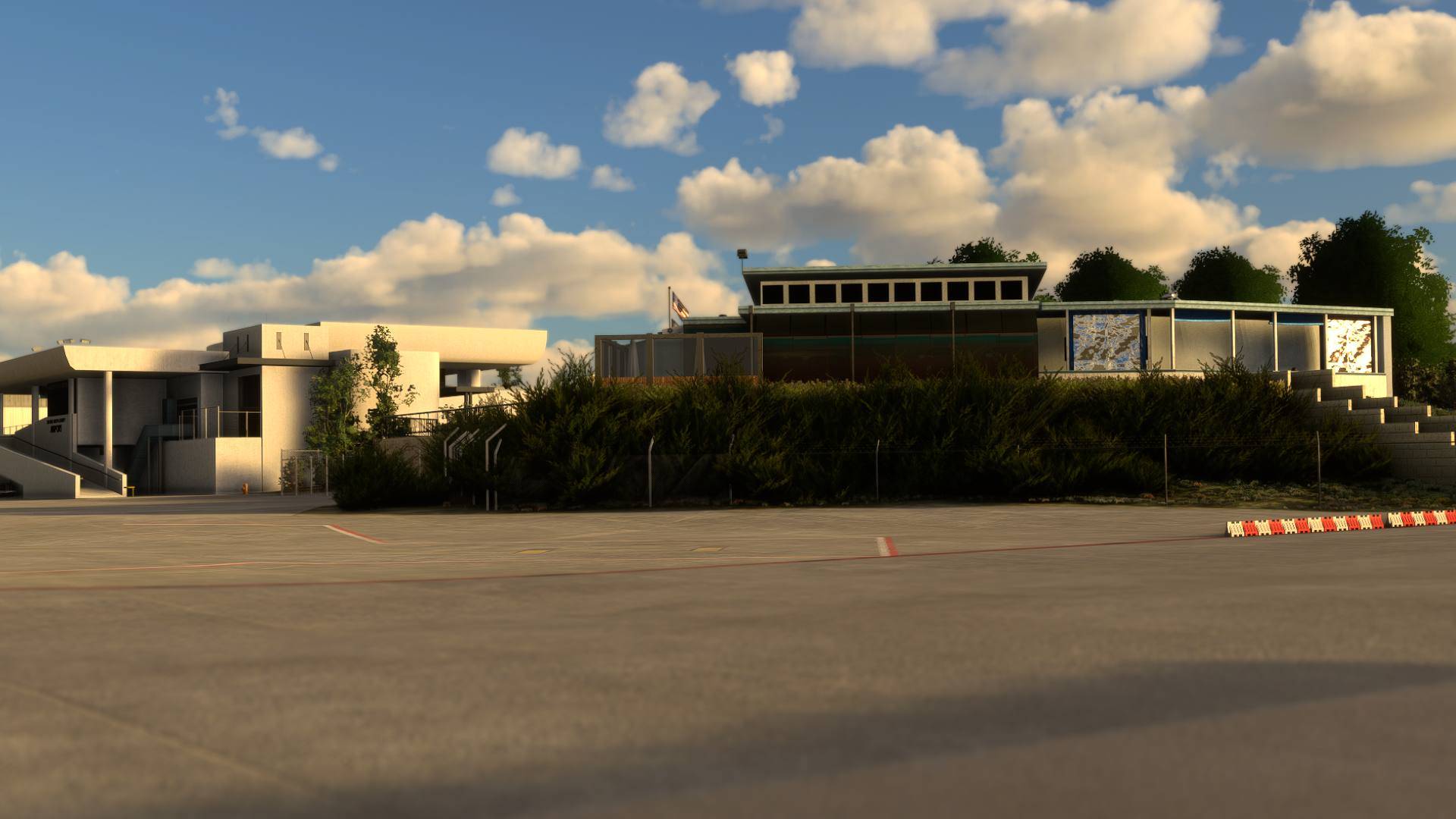
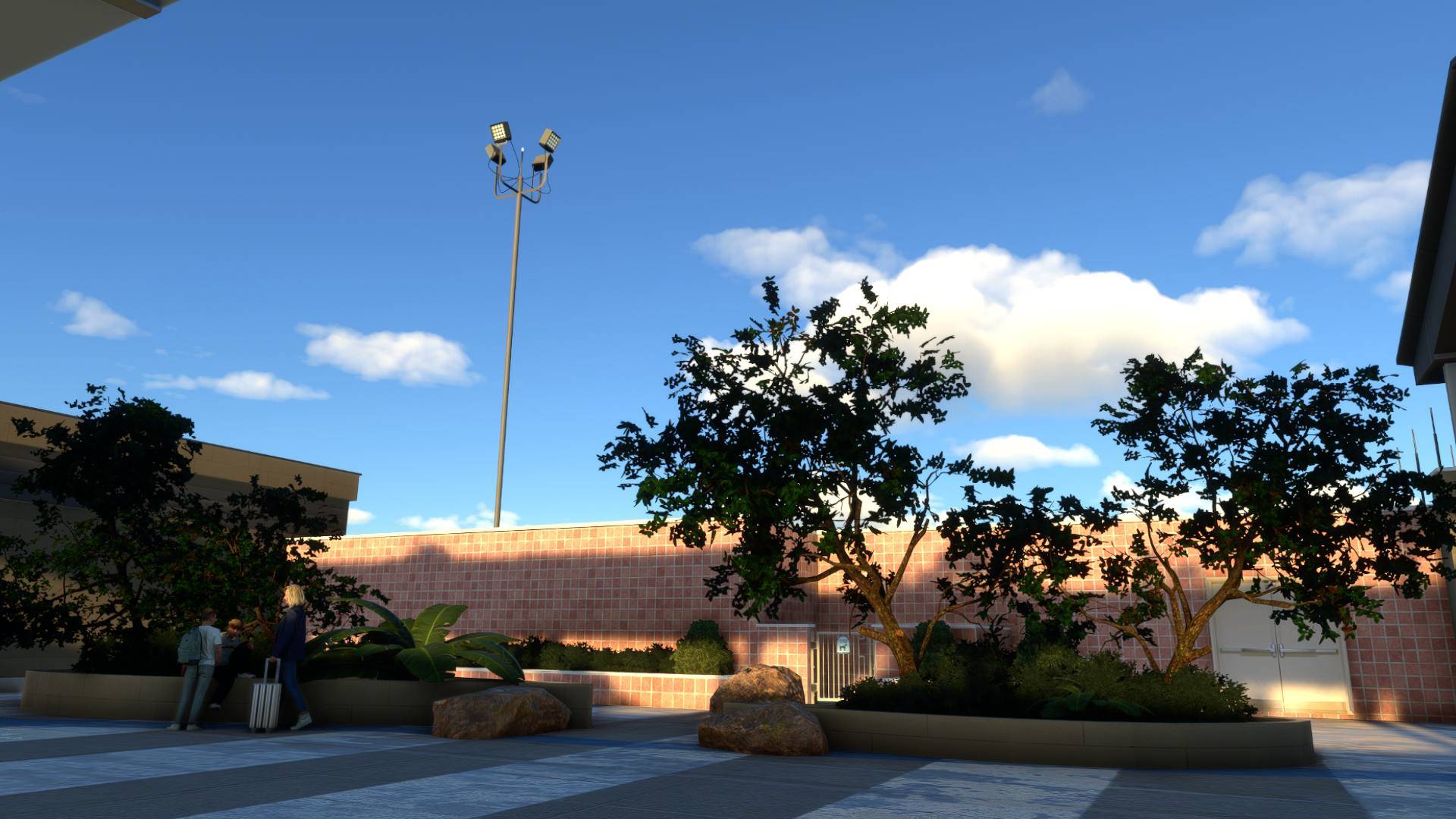
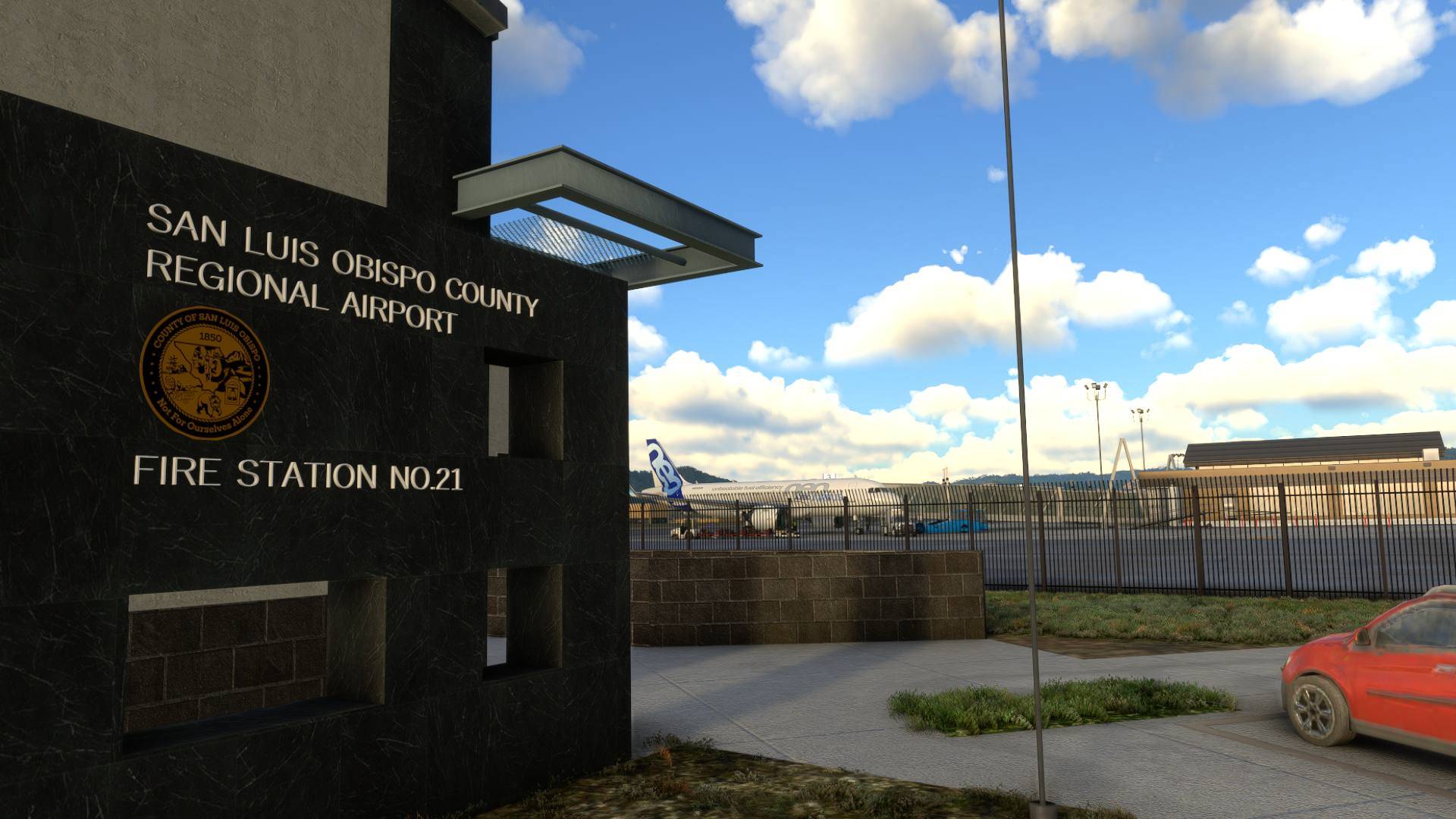
The terminal at KSBP has a distinctive mid-century California design — flat roofs, glass walls, exposed concrete, and native plantings. We modeled the full terminal complex including the interior lobby, the boarding gate area, and the landside courtyard where passengers wait with their luggage under mature trees and next to boulders sourced from the local hills. The fire station at the airport entrance — Fire Station No. 21, with the San Luis Obispo County seal on its facade — is one of those small details that immediately tells you where you are.
Getting the landside right matters because it's what you see on approach and departure. The terminal roofline, the parking lot lighting, the road layout — these are the landmarks that build recognition. At a small regional airport, these structures occupy a proportionally larger part of the visual scene than at a major hub, so inaccuracies are more noticeable.
General aviation detail
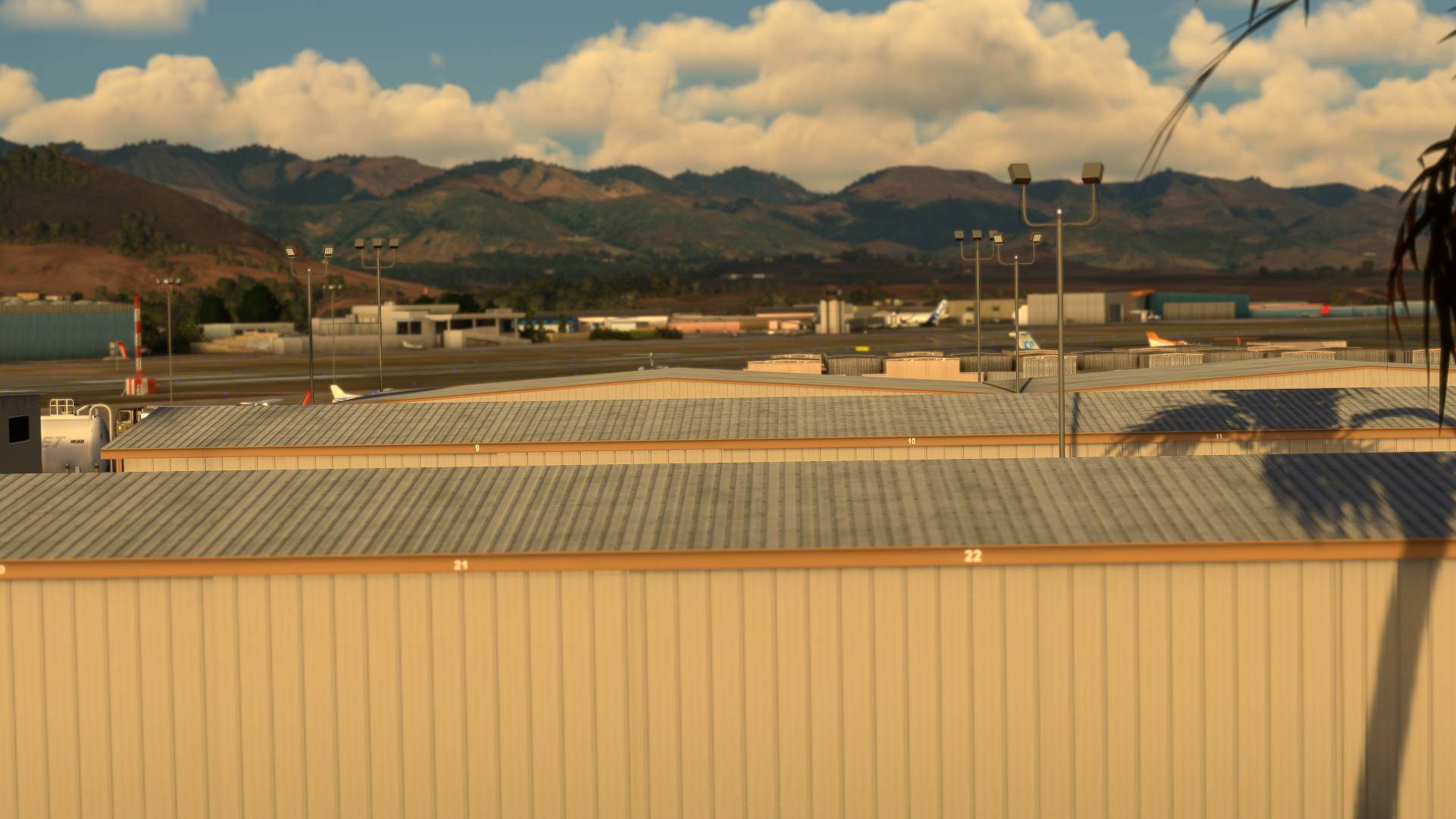
The GA side of KSBP is where the airport's character really lives. Rows of T-hangars numbered in sequence, a self-serve Gilbarco fuel pump island with safety bollards and fire extinguisher, the Air San Luis Cessna dealer hangar with its blue-and-white branding, and the EAA chapter building with its gold medallion. These are the details that make a GA pilot look at the scenery and think "that's right."
We modeled every hangar row, the taxilane markings between them, and the fuel island down to the pump number and warning labels. The Gilbarco pump with its "No Smoking" and "Turn Off Engine" signage, the yellow and blue safety bollards, the red fire extinguisher cabinet — these are small objects, but they're the ones you see at eye level when you're taxiing. They set the scale and make the airport feel occupied and operational rather than like a collection of boxes next to a runway.
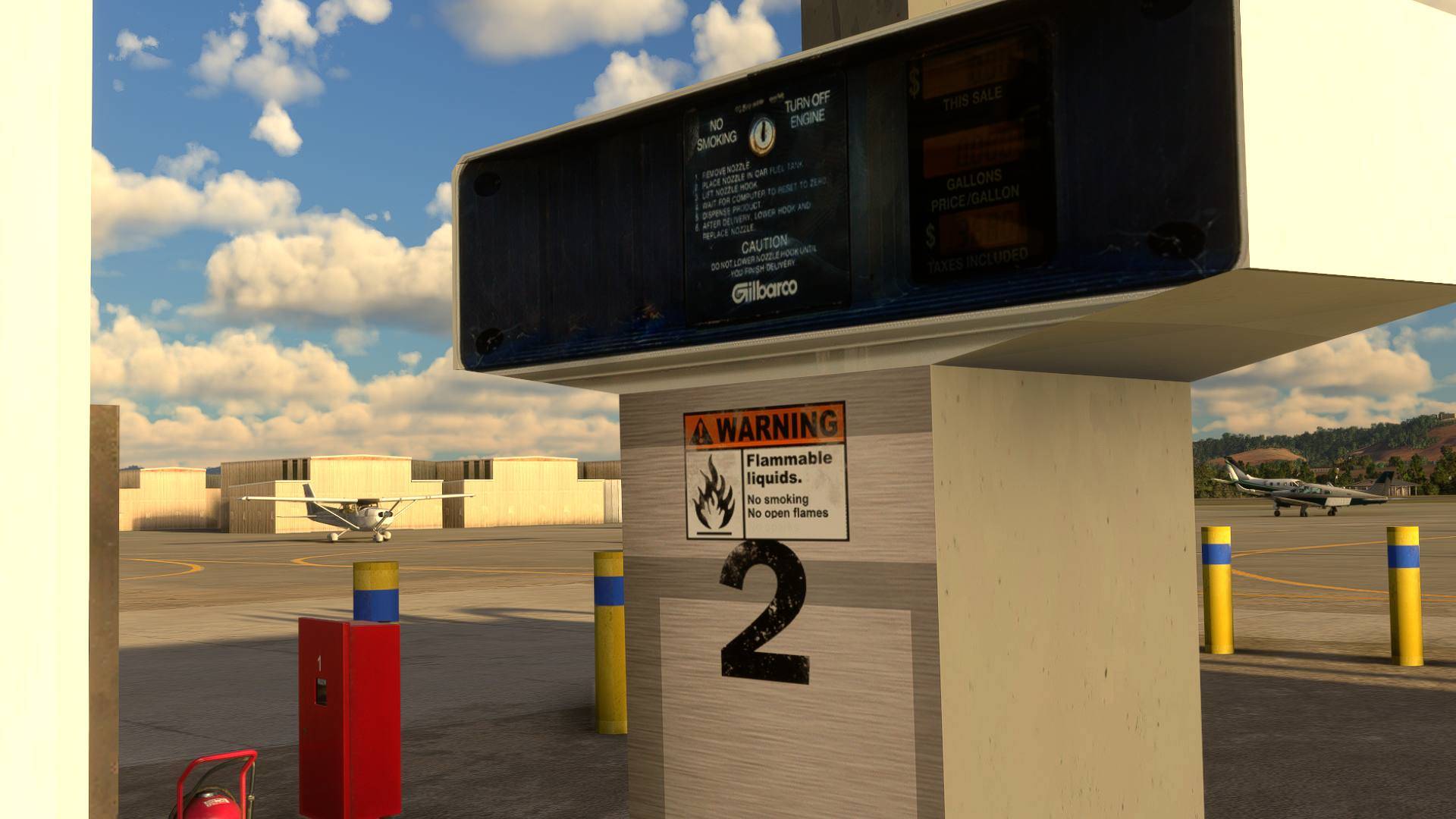
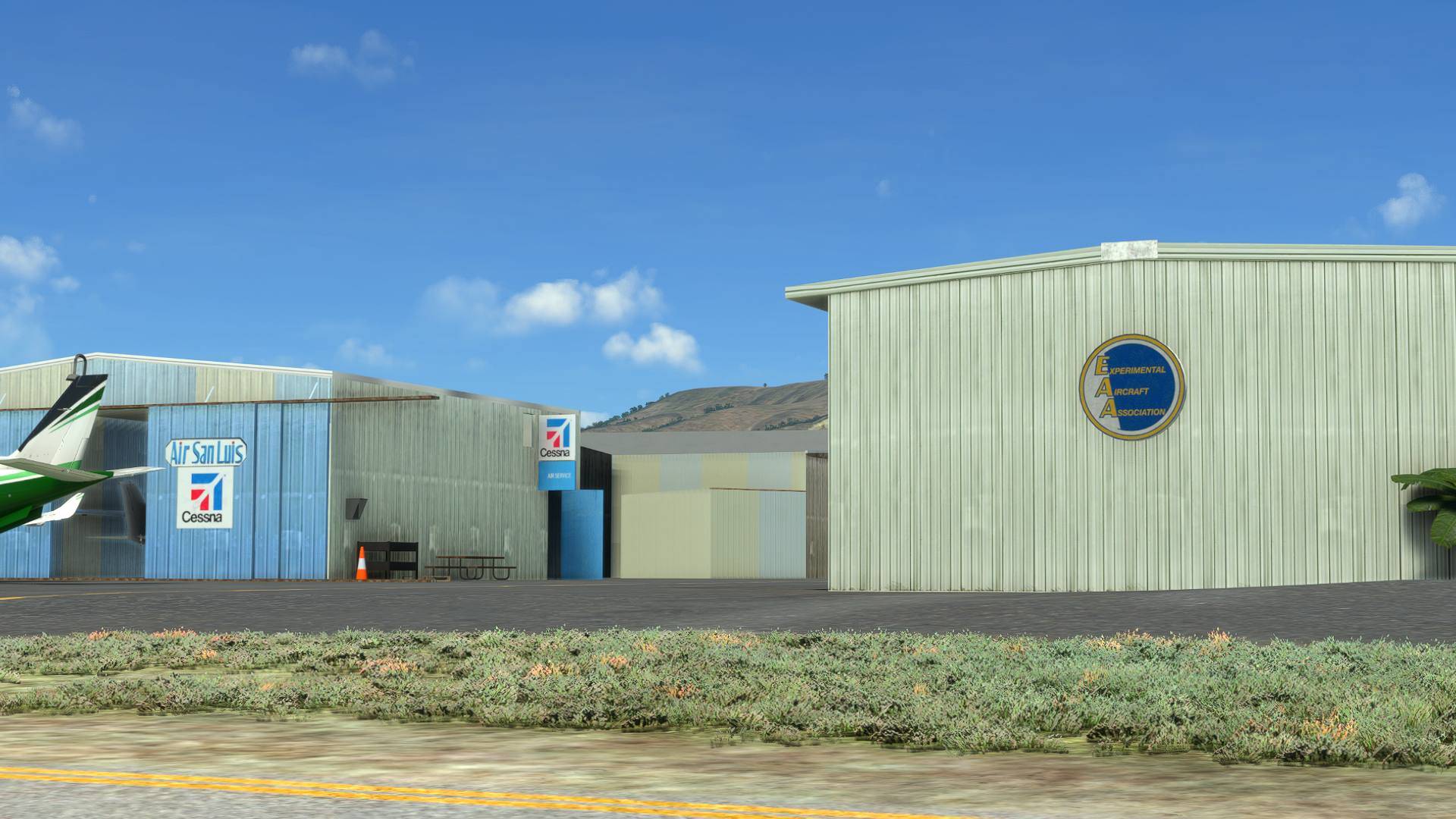
The lesson from KSBP is that at a small regional airport, the character lives in the ground-level details — the fuel pump, the fire station sign, the hangar numbers. Get those right and the airport feels real before you even look at the terminal. Every object was modeled with hand-crafted PBR textures: unique albedo, roughness, and normal maps that hold up whether the sun is overhead or grazing in at golden hour.
Lighting and atmosphere
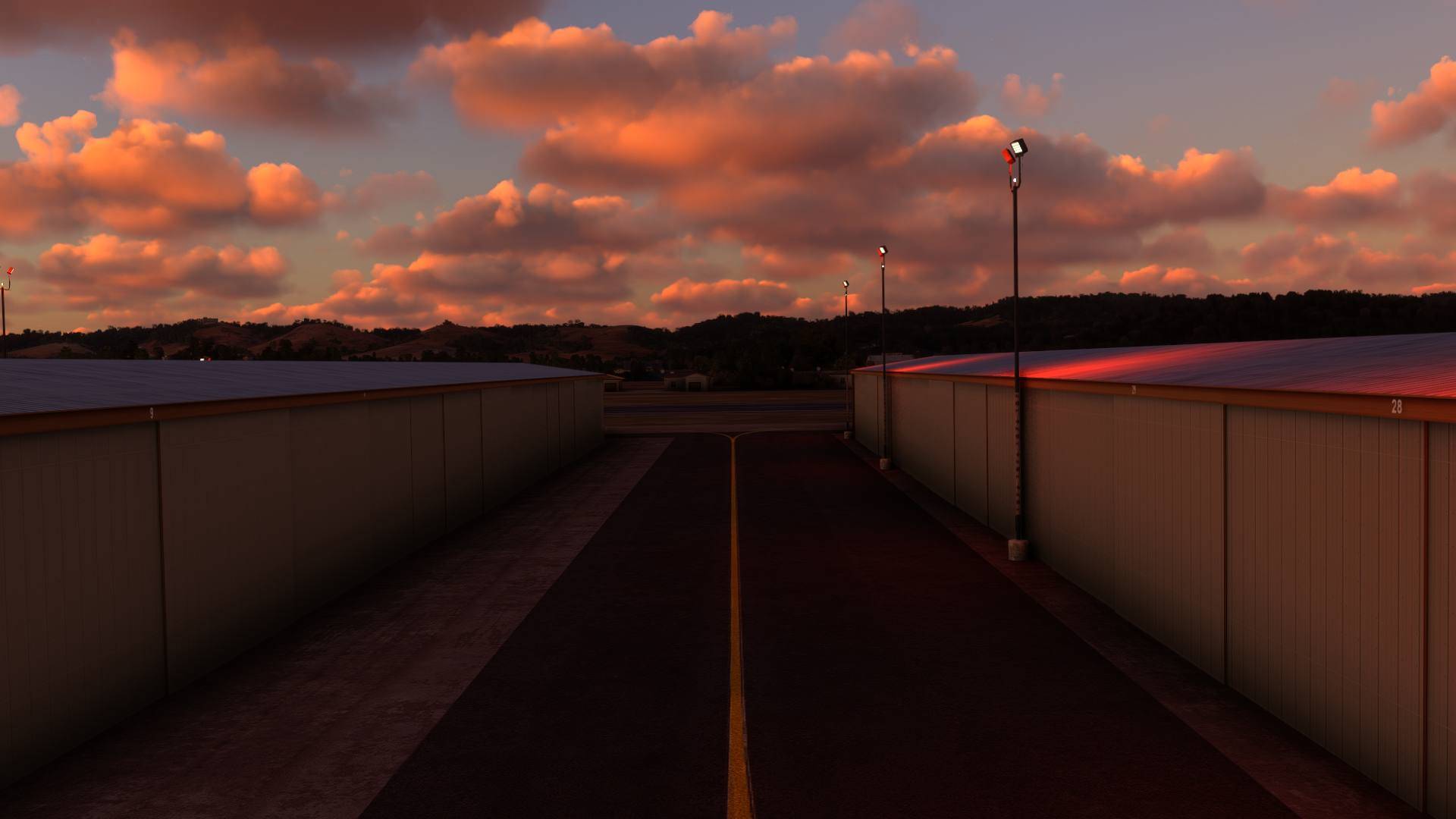
KSBP at dusk is one of the most atmospheric approaches on the California coast. The hills catch the last light while the hangar rows fall into shadow, and the apron floods and runway edge lights start to define the operational surface. We modeled the full airport lighting installation including ramp floods, taxiway centerline lights, runway edge lighting, and the approach lighting on runway 29.
The hangar district at sunset is where the lighting model really proves itself. The rows of metal-clad hangars create a corridor that funnels the warm light of the setting sun, casting long shadows and catching reflections on the corrugated surfaces. This interplay between metallic PBR materials and dynamic lighting creates a scene that changes minute by minute through the golden hour — something that flat, non-PBR textures simply cannot reproduce.
What KSBP taught us
Every project teaches you something. KSBP taught us that a small regional airport is harder to model convincingly than a large international hub. At a big airport, the sheer scale of the infrastructure carries the visual impression. At a small airport, every building, every sign, every piece of ground equipment is visible and identifiable. There's nowhere to hide behind abstraction.
The project also reinforced how much terrain context matters. KSBP without the Santa Lucia Range would be unrecognizable. The hills are as much a part of the airport's identity as the terminal. That understanding — that an airport is inseparable from the landscape it sits in — continues to drive how we approach every new project, from GCXO in the Canary Islands to EHAM in the Dutch lowlands.